

Trump’s difficulties have highlighted the growing willingness of US allies to resist his demands
US President Donald Trump spent the week attempting to project American power on the international stage, from a dynamic speech at the UN General Assembly to a critical meeting with Chinese President Xi Jinping. However, the intense diplomatic activity also highlighted the limits of Trump's ability to shape events abroad, as allies resist his demands, conflicts remain unresolved, and China gains greater influence in areas critical to the global economy. Trump faces growing pressure on multiple fronts. The war with Iran has driven up energy prices in the US and damaged his approval ratings, relations with several traditional allies have deteriorated, and China's growing clout in trade and technology presents a challenge that cannot easily be addressed through tariffs or military pressure.
Trump-Xi Summit brought limited progress
Xi arrived in Washington for a state visit surrounded by ceremony and intense diplomatic attention, but the summit yielded few significant breakthroughs on some of the most difficult issues between the two nations. The most tangible outcome was the apparent two-month extension of the trade truce between the world's two largest economies, which was set to expire in November. Trump avoided publicly raising his major disagreements with Xi on issues such as artificial intelligence, Taiwan, trade, and Iran. Chinese state media, however, reported that Xi urged Trump to oppose Taiwanese independence. Trump's approach also contrasted with his previously far more confrontational tariff strategy toward Beijing. China's control over rare earths has strengthened its negotiating leverage, particularly as these materials are essential for a range of industries, from advanced technology to automaking. Beijing has already demonstrated a willingness to use its dominance in rare earth elements as economic leverage. "Trump believes he is returning us to a world where might makes right," said Brett Bruen, a former foreign policy adviser in the Obama administration who now heads the Global Situation Room consultancy. "But it is notable that he becomes much more hesitant when dealing with Xi Jinping and growing Chinese power." The White House rejected the notion that Trump's foreign policy has stalled. A senior administration official stated that Trump remains focused on advancing US interests, citing his claim that his policies prevented Iran from acquiring a nuclear weapon. Iran consistently maintains that its nuclear program is peaceful.
War with Iran dominates Trump's second term
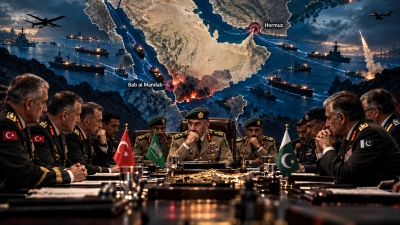
The conflict with Iran remained the central challenge overshadowing Trump's diplomatic activity throughout the week. Trump launched the war alongside Israel on February 28, and the conflict has continued for nearly seven months, disrupting energy supplies and spreading into parts of the region, including Yemen and the Red Sea maritime corridor. Iran's continued resistance despite sustained military and economic pressure has evolved into one of the most difficult foreign policy problems of Trump's second term. In his speech to the UN, Trump defended the campaign and declared that "America is back," presenting the United States as stronger than ever. However, Reuters notes that the prolonged conflict has also complicated his domestic political standing. Rising energy prices and opposition to the war have contributed to deepening divisions within his political base, creating a potential risk ahead of the midterm elections. Trump entered his second term with several early foreign policy achievements to display, including a ceasefire in Gaza and the capture of the Venezuelan leader. However, unresolved conflicts and stalled negotiations are increasingly becoming a defining feature of his international agenda.
Allies push back against Washington
Trump’s difficulties have also highlighted the growing willingness of US allies to resist his demands. Many European and Asian partners have rejected calls to support the conflict with Iran, which Trump initiated without consulting them. Several leaders used this year's UN General Assembly to defend national sovereignty and multilateral cooperation, with some of their positions standing in stark contrast to Trump's approach. French President Emmanuel Macron warned against a return to what he described as the "law of the jungle," arguing that nations face a choice between international cooperation and a system based on power and coercion. Brazilian President Luiz Inacio Lula da Silva also criticized foreign interference in his country and rejected the idea that military force is the answer to security challenges. "We do not need aircraft carriers patrolling our territorial waters," Lula stated. "We need cooperation to stem the flow of weapons and money fueling crime." The White House dismissed the criticism, maintaining that Trump is focused on results rather than political posturing. The administration also argued that some foreign leaders express views publicly that differ from those conveyed privately to the US President.
Trump faces resistance in Ukraine and Greenland
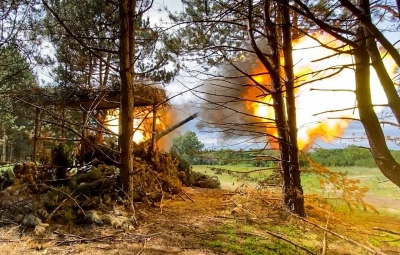
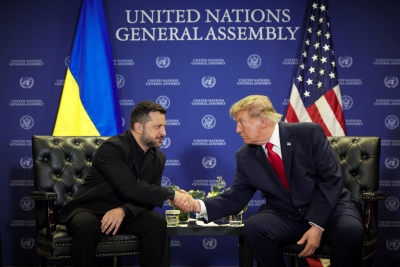
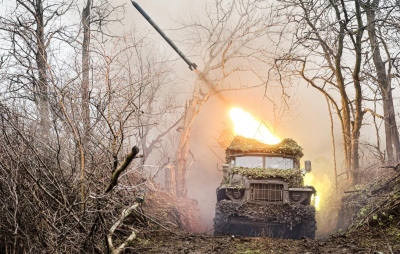
Trump’s efforts to pressure Russia and Ukraine to agree to even a limited ceasefire on energy infrastructure have similarly struggled to yield meaningful progress. His approach to Greenland encountered comparable limitations. Trump highlighted an agreement with Denmark and Greenland that would expand the US military presence on the Arctic island. However, the deal fell significantly short of his previous demand for the United States to "own" Greenland, as well as his threat to consider taking the territory by force. The issue is particularly delicate, as Greenland is an autonomous territory within the Kingdom of Denmark, which is also a member of NATO. Ian Bremmer, president of Eurasia Group, noted that international pushback against Trump has shifted significantly since his return to the White House.
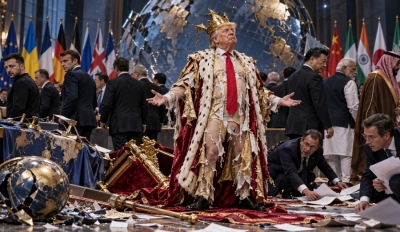
"A year ago, few countries dared to go against Trump," Bremmer wrote on X. "Now Canada, Europe, China, Iran, Russia, and others are all more willing to say no." Trump himself appeared to acknowledge the uncertainty surrounding his influence during his speech to the UN. Speaking about artificial intelligence and his proposal to describe the technology as "super-intelligence," he questioned whether he still possesses enough power to affect international decisions. "Let's see if I have any power," Trump said. "I might, and I might not. We'll find out very soon." The statement captured the central contradiction of Trump's diplomatic week: a president determined to project American influence, facing a world increasingly willing to negotiate with Washington, resist its demands, and pursue its own national interests.
www.bankingnews.gr



Σχόλια αναγνωστών